Traction - Australian Built, KA Class History

Rebuilt
This page was last updated on
February 17, 2008
Bookmark English Electric Growl Homepage
KA Class History

Perth, Western Australia

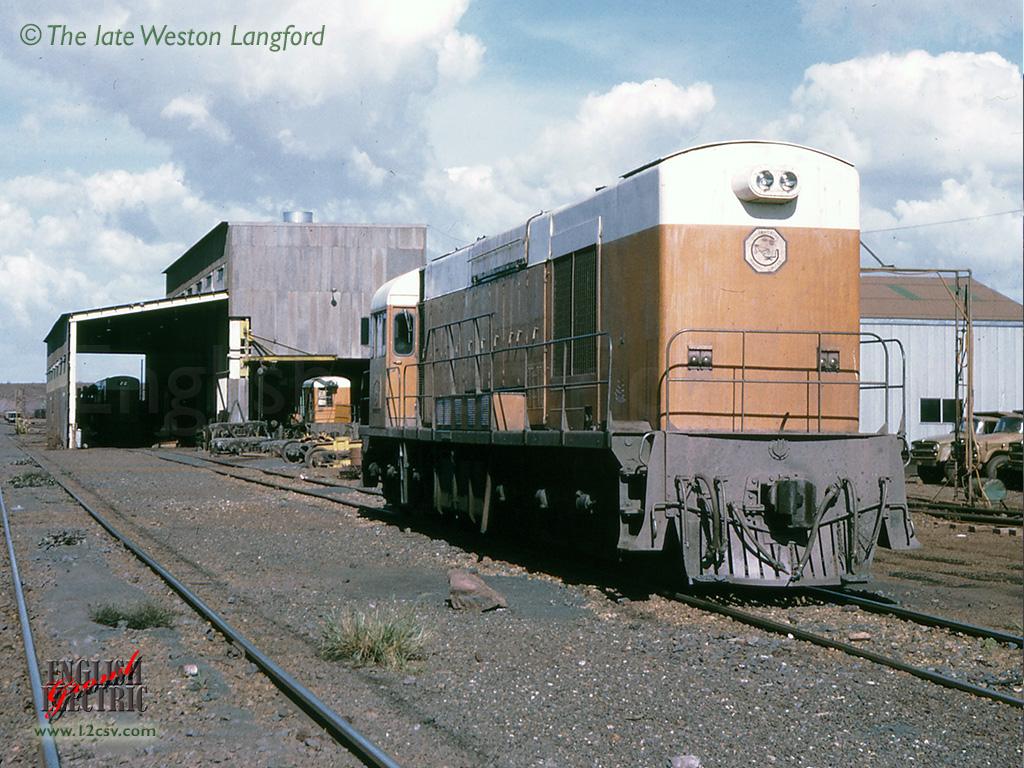
One of the three KA class locomotives, KA211 was sold to Goninan's after withdrawal, where it was used as an engine test bed for a number of years. With obvious modifications, it is seen here in November, 2000.

© Peter Clark

In the early 1970's, the expansion of the Standard gauge network in Western Australia, including the project to construct a totally new line from West Kalgoorlie to Lefroy by the way of Kambalda, 82 kilometers in length and the conversion from narrow to standard gauge of the line south of Lefroy to the port at Esperance, led to the need to re-distribute the NG Diesel fleet to other work.

Part of this redistribution included the conversion of some machines to standard gauge, the decision about which units were converted was swayed by the Lefroy Salt company who had purchased two RA class locomotives to haul their trains of salt for export. Initially English Electric was approached to handle five conversions, but it was soon decided to take on the conversion 'in house' at WAGR, this ultimately led to only three conversions.

The three RA Class loco's chosen for the project, including Lefroys RA1917 and RA1918, were taken into the WAGR Midland Workshops during 1974, where the alterations took place. The old NG bogies were removed and stripped of all reusable parts, new cast bogie frames were designed and made within the workshops. Some parts needed to be modified before they were fitted to the new constructions, once again this was all done in house.

In late August 1974, KA211 entered service from Midland and soon became a member of the WAGR SG fleet, deputising for the K class locos when required. KA211 was followed into service by KA213 in September and KA212 early in October.

At the time of the conversions, although the KA class became integrated into the operations of the K class when not required in the Eastern Goldfields area, the adaptions carried out to the class made them slightly more preferable on the steep gradients of the Esperance line between Norseman and Salmon Gums. A standard K class was limited to a 1,115 tonnes loading on the 1 in 70 grades, whereas for a KA class this increased to 1,340 tonnes.

At their time of introduction, the KA Class locomotives were in fact the only locomotives that were allowed to traverse the Kalgoorlie to Leonora line, but then only with some restrictions, the amount of fuel carried on each trip and that that the load was limited to 985 tonnes.

Once you have visited these pages, if you think you can add or correct any of the information on show, please use the links on the contact page to let us know.