Page not Found!!
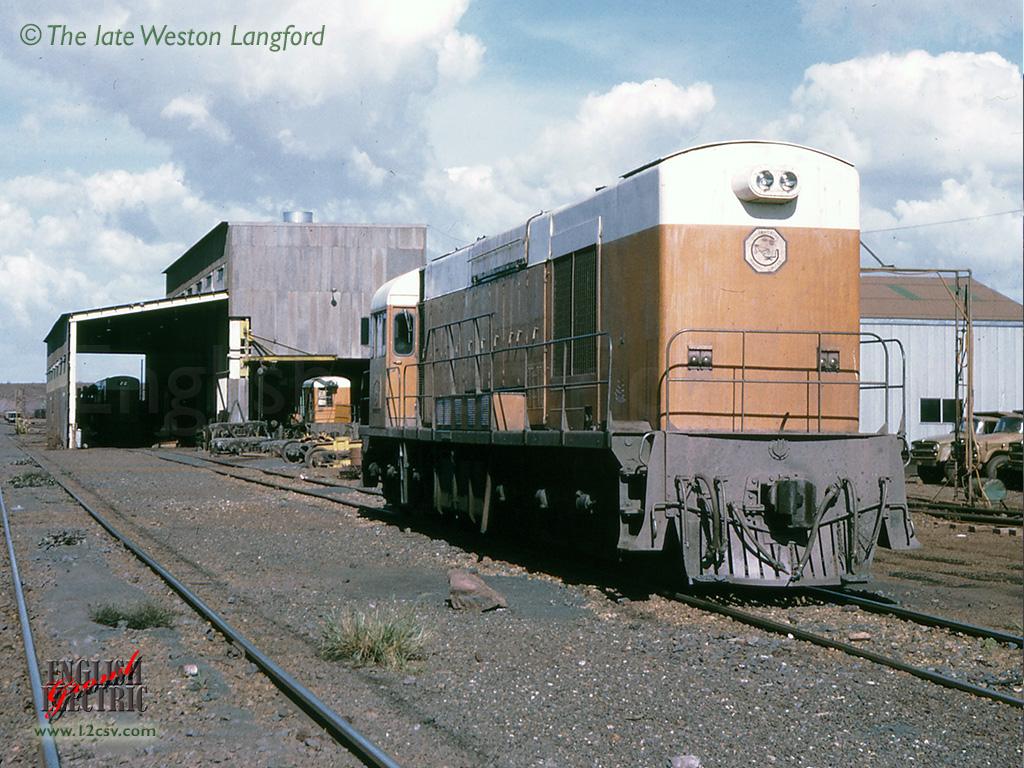
The maintenance shed at Goldsworthy was a small steel erected shed that could accommodate 2 locos. On March 6th, 1972 A Class, no. 6 is seen outside the shed awaiting it's next duty. No. 6 began life as K202 with W.A.G.R. but in March 1968 it moved north as a replacement for seriously damaged No.3, which only left the company with 3 operational locos
© The late Weston Langford
© The late Weston Langford
The page that you have requested is not available.
If you have connected to the site from another site, it may be due to an orphaned link. If you have used a saved 'bookmark', the page may have been removed or renamed during a site update, so please consider saving the 'home' page for future reference.
If you would like to get in touch concerning this issue, please use this Contact Form or, if you already know the address, through e-mail.